
Democracy or Design? Conservative Candidates Barred in Romania and France Under Suspicious Circumstances
In recent months, Europe has witnessed a troubling trend: the systematic disqualification of conservative, nationalist political figures.

In recent months, Europe has witnessed a troubling trend: the systematic disqualification of conservative, nationalist political figures under questionable legal or procedural pretenses. What is unfolding in Romania—and now France—is raising urgent questions about the state of democracy across the continent and the mounting pressure on candidates who challenge the globalist political orthodoxy.
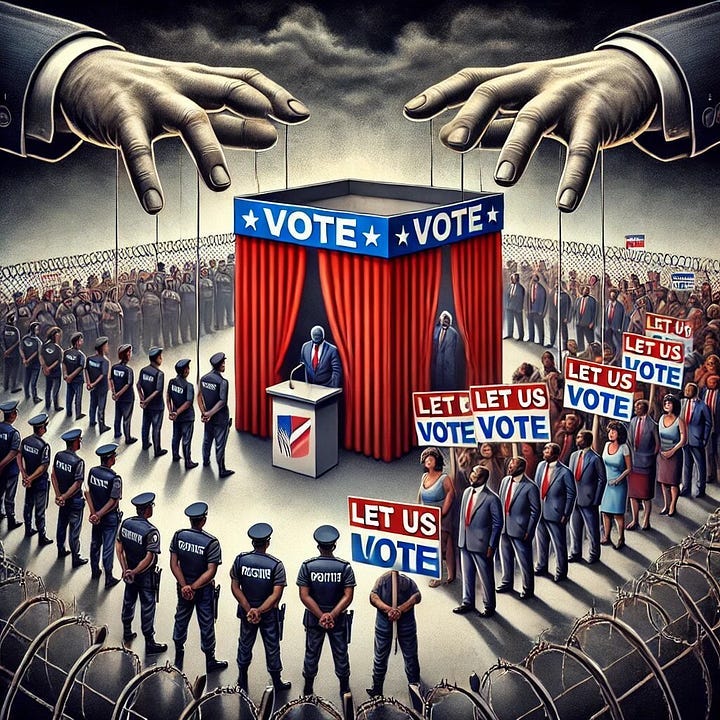
Romania’s Political Shake-Up: Georgescu Removed from the Ballot
In a seismic shift within Romania’s political landscape, the Central Election Bureau has barred far-right, nationalist candidate Călin Georgescu from participating in the upcoming May 2025 presidential election re-run. The decision follows the annulment of Romania’s December 2024 elections, where Georgescu, running as an independent, led the first round amid surging popular support and a powerful online campaign.
Romania’s Constitutional Court ruled the previous election null due to alleged Russian interference, citing intelligence suggesting Georgescu’s campaign was bolstered by a Kremlin-backed digital disinformation operation. Yet many observers view the move with skepticism, arguing that the legal basis for his removal from the ballot is flimsy and politically motivated.
The disqualification came through a judicial process that involved no jury trial, which Georgescu’s legal team and supporters have condemned as a breach of democratic norms. He now faces a battery of criminal investigations, including accusations of associating with fascist organizations and violations of campaign finance law. These charges, however, are widely seen as selective enforcement, especially given the absence of equivalent scrutiny toward establishment-aligned candidates.
Waves of Unrest and Rising Support for Alternatives
The ruling has provoked widespread protests across Romania, particularly among Georgescu’s young and digitally active supporter base. Critics argue that the state is weaponizing legal institutions to prevent a legitimate populist challenge, threatening the integrity of Romania’s democratic process.
In his place, George Simion of the Alliance for the Union of Romanians (AUR) has become the leading candidate, walking a careful line between nationalist rhetoric and pro-NATO commitments. His stance seeks to separate himself from the pro-Russian label, all while tapping into the same anti-establishment sentiment that powered Georgescu’s rise.

The French Parallel: A Conservative Silenced
Across the European landscape, France has experienced a disturbingly similar political maneuver. Jean-Baptiste Vallois, a rising conservative figure known for his tough-on-immigration platform and outspoken opposition to European federalism, was recently disqualified from the upcoming leadership race. Vallois, once considered a real contender for the presidency, was removed from the race over alleged campaign finance irregularities—violations that many analysts argue are minor and routinely overlooked for establishment candidates.
French electoral authorities cited inconsistencies in donor disclosures and reporting formats—issues that are often resolved with administrative fines rather than political disqualification. Vallois' legal team noted that multiple candidates were found with similar irregularities, but only he was subjected to full removal from the race.
This echoes Georgescu’s fate in Romania: both were anti-globalist, both were polling strongly, and both were removed from contention through mechanisms that appeared disproportionately punitive and politically selective.
Parallels with U.S. Politics: A Familiar Struggle Against the Global Left
The removal of Georgescu and Vallois mirrors a broader global phenomenon — one deeply familiar to American voters. In both Romania and France, conservative populist candidates are rising in response to unchecked immigration, far-left economic policies, and globalist governance structures that marginalize national sovereignty.
These dynamics directly reflect the American political landscape, where Donald Trump’s presidential campaigns — particularly his victorious 2024 run — faced relentless opposition through legal, media, and institutional channels. Just as Trump endured repeated indictments and procedural challenges, so too have Georgescu and Vallois been targeted by political and judicial mechanisms that many argue are less about justice and more about control.
In the U.S., the system ultimately held, and Trump’s return to office marked a turning point against progressive overreach. His victory signaled that, when electoral systems remain intact and public will is respected, populist movements can still succeed. Unfortunately, in both Romania and France, the process appears far more compromised — raising alarms not just for those countries, but for anyone who believes in the foundational tenets of democratic governance.

Conclusion: A New Battleground for Democracy
What we’re seeing across Romania and France is not just the rise of conservative figures—it’s the rise of a counter-force against the globalist, bureaucratic elite that has dominated Western politics for decades. But as these movements gain traction, they are increasingly met with resistance not through debate or elections but through legal technicalities, administrative blocks, and institutional suppression.
As Donald Trump demonstrated in the United States, political insurgents can still triumph when the democratic process is allowed to unfold. For Europe, however, these recent events suggest that the ballot box is becoming less a symbol of public will—and more a gatekeeper for establishment power. Whether these trends continue or whether populist movements can overcome them may very well define the next decade of Western politics.
You can sign up to receive emails each time I publish.
Link to the original Bitcoin White Paper: White Paper:
Dollar-Cost-Average Bitcoin ($10 Free Bitcoin): DCA-SWAN
Access to our High-Net-Worth Bitcoin investor technical services is available now: cccCloud
“This content is intended solely for informational use. It is not a substitute for professional financial or legal counsel. Accuracy of the information is not guaranteed; therefore, it is advisable to consult with a qualified financial advisor before making any substantial financial commitments.”